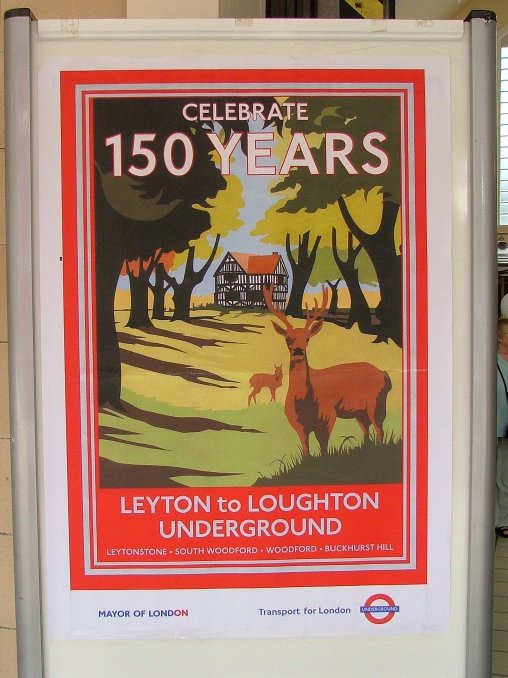
Sunday, August 18, 2013


Edward Thomas and Three Women: Helen Thomas

 Helen is the one who matters: her devotion and loyalty to Edward Thomas must move all but the stoniest heart.  This is just an introduction to Helen.


Helen Noble, the daughter of the journalist, James Ashcroft Noble, was born in Liverpool on 11th July 1877. Noble, who found work writing for The Spectator, moved the family to London in 1880. 

After an education at Wintersdorf School in Southport, she became a nursery governess in Rotherfield. She was quite 'bohemian' in dress and in the circles she moved in.

She met Edward through her father who encouraged his writing and their getting to know each other.

Helen became pregnant with Merfyn while Edward was an undergraduate at Oxford .( See my blogs on Oxford.) In 1896, they married and times were very hard financially. Bronwen was born and became quite ill with their poor living conditions, as Edward struggled to make a living by his writing.


Helen taught kindergarden children at Beadles, a progressive co-educational boarding school in Steep where they had moved. They had a third child, Myfanwy, who became a writer.
After the war Helen wrote about her relationship with Edward  in  1926 and 1931. The two volumes, 'As it Was '  and 'World without End' were republished with the  perfect title 'Under Storm's Wing' (from  the poem 'Interval').  Her daughter, Myfanwy, claims the books were written as a form of therapy to lift the depression which settled over her after the death of her husband. Helen  died in 1967.
It was a way of keeping Edward alive for her, and it is an intelligent, passionate work; in it Helen often belittles her intellect and wisdom, sadly, something she had probably evolved under Edward's frequent unkindness.

I depended heavily on 'Under Storm's Wing' and decided to have Helen in the first person - the voice  I give her is not that of Helen in her book - it needs to have that sense of happening in the present which Jude Morgan refers to in his 'Shakespeare'. But  I chose to have her write a memoir, 'Half a Kiss, Half a Tear' and to open and close it with scenes and phrases  taken very closely from Under Storm's Wing. Here is an extract from the closing scene: it is almost Christmas, 1916. She had not expected him to be free to come home for what would be a brief leave before embarking for France, but:          


'My dearest, my draft leave will include Christmas after all!’


I knew I must live in the present, that we could at least be together like doomed lovers, doubting that they would have a future and making the most of their time. So I told the children and we danced all around the house, singing,


‘He’s coming home for Christmas’ to the tune of ‘For he’s a jolly good fellow.’ And in the same post came a cheque for twenty pounds, a gift from a private fund for writers. Twenty pounds – so much money! I hurried up to London and bought the best Jaeger sleeping bag, thick gloves and a volume of Shakespeare’s sonnets for Edward, more presents for the children and a red dress for myself – Edward loved to see me in red. And I bought fruit, sweets, and other luxuries, even some wine.


The children collected fir, ivy and holly from the forest. We dug up a little Christmas tree from the garden and made it dance with sparkling decorations and candles ready to light.


Our Christmas Day was perfect. We woke to hear the children, Baba especially, exclaiming over presents in the lumpy stockings. Edward had crept in as usual and filled them while they slept. We always put exciting little things in them; bigger presents waited until later. Edward went down to make tea, his army greatcoat over his pyjamas, and then we all five squeezed into our big bed. Merfyn did still have a stocking, but we acknowledged his grown-up status with shaving soap, cigarettes and a new mouth-organ, and Bronwen’s with the grown-up things she liked, scent, ribbons and a lacy handkerchief, as well as a new sketch-book and crayons. Merfyn played, ‘It’s a long long trail’ on the mouth-organ while Edward wound up a grey clockwork mouse I’d bought Baba. It scuttled over the floorboards and to please her Bronwen and I duly screamed in the way women must.


As usual, Eleanor was too generous, with a great parcel of presents, each one gorgeously wrapped. Edward was happy to have the sumptuous warm Jaeger sleeping bag from me and straight away marked the name tape – P.E. Thomas.


The day passed happily. As soon as tea was over I went out and lit the coloured candles on the Christmas tree, then Edward carried it in from where Merfyn had hidden it in the woodshed. Myfanwy was entranced. She’d never seen a Christmas tree before.


After tea we sat near the fire, eating nuts and talking or reading our new books. Then Edward took Baba on his knee and sang Welsh songs and some rousing army ones.


It was just before her bedtime that I watched the two of them, Baba on a chair by the window, looking out at the snow and Edward behind her looking out too. They were hoping to see deer.


‘Shall we see any? Are they out there?’ she asked. I remember that she wondered if they were cold and frightened, out in the dark, not like her, safe in the cosy sitting room, with the lamp lit and her father’s hand on her shoulder. That was when I wept.
                                                                            *
 The poem- of course:
And You, Helen
 
And you, Helen, what should I give you?
So many things I would give you
Had I an infinite great store
Offered me and I stood before
To choose. I would give you youth,
All kinds of loveliness and truth,
A clear eye as good as mine,
Lands, waters, flowers, wine,
As many children as your heart
Might wish for, a far better art
Than mine can be, all you have lost
Upon the travelling waters tossed,
Or given to me. If I could choose
Freely in that great treasure-house
Anything from any shelf,
I would give you back yourself,
And power to discriminate
What you want and want it not too late,
Many fair days free from care
And heart to enjoy both foul and fair,
And myself, too, if I could find
Where it lay hidden and it proved kind.  

Wednesday, August 14, 2013


Settings: High Beech, Epping Forest and Loughton


The Thomases left Steep, but Steep has never forgotten the Thomases. Edward's name is on the war memorial there, not here.

The old nurseryman' s cottage at High Beech (now Beach) was Edward's home very briefly:from November 1916 to early January 1915.  And for most of that he was away in  Army Camp at Romford and later Trowbridge. Helen stayed on only a very short time after his death.
They moved for several reasons: to be nearer to London, for family and Merfyn's apprenticeship, and also because of some disappointment with Steep.
A third reason - being closer for Edward to come on leave - had no meaning given the decision he was about to make, of volunteering to go abroad. Possibly Edward thought it would be better for Helen to be nearer London, her sister and Eleanor, should the worst happen

The cottage where they lived is no longer there, but this is the area, on the western side of Epping Forest, Paul's Nursery Road, High Beech.


An extract from 'Helen's'
Half a kiss, half a tear.

'In October we moved to High Beech, a part of Epping Forest – Edward found the house for us. He had been there briefly on a training camp and liked the open commons and miles of ancient forest. It was convenient for London, for Walthamstow where Merfyn was working, and we heard that quite a colony of artists and writers was beginning to live in the area.

Ours was the abandoned cottage of a nurseryman who was away at the front, so we had good well-tilled soil, and a hen-run, important because of the shortages – I managed to buy some Leghorn pullets. In late September, with the beech leaves turning russet and the sun still slanting warmly through the trees it looked quite hospitable. Silver birches, always a favourite of mine, swayed delicately together at the end of the garden. Edward and I put up wire-netting to protect the vegetables against rabbits.

He took Bronwen and Baba walking in the forest, showing them the strange old trees once pollarded for firewood and grown into curious shapes. They found secret ponds, places where we might go to catch a glimpse of fallow deer coming to drink. Bronnie, who was such an expert on wild flowers, would have to learn about mushrooms and toadstools. Edward showed the girls how to leave a trail of white pebbles as they went, like Hansel and Gretel, so that they would not be lost.

This was somewhere perhaps for us to make a new start after the war, close to many of our friends and to London, but still as rural as we could wish. Merfyn could bicycle to his work; he was earning fifteen shillings a week so we were better off in that way. Bronnie would have to go a cheaper school in Loughton, the Girls’ High School, though for a time she’d stay on with my sister Mary and her cousin Margaret.

Edward was on his Officer training in Wiltshire – so near to Steep! It was a long slow train journey for him to come to us. I longed for him to be with us, there on the edge of the forest. We were like woodcutters in a fairy tale, our only neighbours deer and badgers. Myfanwy would have no playmates and before long I would have to find her a school. I was doing my best, making the most of things.

But by November, with the dark coming early, I felt differently about the house and the Forest. The lovely canopy of summer and autumn had turned to nothing but a brown muddy mulch underfoot. It rained and rained, the house was cold and the dreadful little paraffin stove instead of a proper range was a great nuisance.

Still Edward liked the little house, the deer, the starlight, lamplight on the trees by the window. He liked the way darkness rushed in when the lamp was turned out. He would walk into the deepest, darkest part of the forest and come home very late. No white pebbles for him. This was habitual with him. It seemed as though he chose to lose himself whenever he found a forest that would serve. But I was afraid of what he was thinking while he walked alone so long.'
Loughton station features in my novel as the end, essentially, of the Thomas's life as a complete family, and the location of Eleanor Farjeon's last sighting of Edward.
Loughton has had three stations and I can't find a picture of the second, the one they would have used. The first was built in 1856, replaced only nine years later. Then in 1940 that was demolished and replaced by a rather striking building, now Grade II Listed.


In  Loughton too  is the Lopping Hall, built to compensate the inhabitants for losing their ancient rights to cut firewood when the Forest was taken over by the Forestry Commission.

      
                                                                        Pollarded trees grown old.     

The Poem: The Dark Forest
Thomas was wary of using 'a too obvious metaphor' and 'entirely conscious symbolism' and had some anxiety about the poem.  Edna Longley comments that 'one context may be the increasing 'multitudes' of war dead.
She prints a discarded last stanza from the second draft, which I have added after the asterisk. What do we make of it, I wonder - comments most welcome.

Dark is the forest and deep, and overhead
Hang stars like seeds of light
In vain, though not since they were sown was bred

Anything more bright.

And evermore mighty multitudes ride
About, nor enter in;
Of the other multitudes that dwell inside
Never yet was one seen.

The forest foxglove is purple, the marguerite
Outside is gold and white,
Nor can those that pluck either blossom greet
The others, day or night.
                       *
Not even beloved and lover or child and mother,
One from within, one from
Without the forest could recognise each other,
Since they have changed their home.
 
          ---------------------------------------------------------------------------------------------
 
Monty the 12 week old Bedlington/ Whippet cross puppy, is keeping me very busy, hence the repetition of older posts. I may try to do a post on Edward Thomas and dogs, as he was a dog lover.